How to Craft the Perfect Engagement Ring: 5 Common Pitfalls to Avoid When Going Custom
It’s finally happened. You’ve finally committed to taking the next step in your relationship, and you only need one last thing to make it official: the engagement ring. While many couples find their perfect match in a ready-to-wear collection, an increasing number of folks are opting for the bespoke route. Custom-designing a ring allows for an unparalleled level of personalization that off-the-shelf options simply cannot match, which ensures the final piece is as unique as the relationship it represents. However, turning your vision into a finished ring takes time and effort, especially if you’re aware of the common don’ts of buying your own engagement ring. It takes a clear roadmap to ensure your ring reflects your tastes without causing undue stress or adding to the cost. To ensure your custom experience results in a timeless heirloom rather than a costly lesson, here are five common pitfalls to avoid when crafting the perfect engagement ring.
1. Overlooking the Practicalities of Daily Wear
One of the most frequent mistakes in custom design is favouring aesthetics over durability. It’s easy to fall in love with a delicate, whisper-thin band or a high-profile setting that makes a diamond appear to float above the finger. However, an engagement ring is intended for daily use; while knowing some basic ring safekeeping tips can help you keep it in good condition, the ring does also need to be able to withstand daily use as well. A too-narrow band (somewhere in the region of a millimeter) may look elegant, but it very often lacks the structural integrity to hold its shape over the years. Similarly, placing a stone too high increases the likelihood of it snagging on clothing or being knocked against hard surfaces. When designing your piece, consider your occupation and hobbies. A low-profile bezel setting might be more appropriate for someone with an active lifestyle than a traditional six-prong mount, for example. Balancing beauty with wearability ensures the ring remains intact for a lifetime.
2. Failing to Research Metal Characteristics
Selecting a metal is about more than just choosing between white, yellow, or rose hues. Each precious metal has distinct physical properties that affect the ring’s longevity and maintenance. Many couples choose white gold for its bright, silvery finish, but they often forget that white gold is naturally slightly yellowish and requires a rhodium plating to achieve that brilliant white look. This plating will eventually wear off, and preventing that requires some professional maintenance every few years to maintain the look. Alternatively, platinum is a popular choice for its "pure" white colour and extreme durability. While it is more expensive than gold, it is also denser and more likely to withstand wear and tear. However, platinum is also a softer metal, one prone to developing a patina of tiny scratches over time. Understanding how these metals age is crucial. If you prefer a ring that stays high-polish with minimal effort, it’s a good idea to discuss alloy options with your jeweller to find the metal that best suits your maintenance expectations.

3. Neglecting the "Total" Proportions
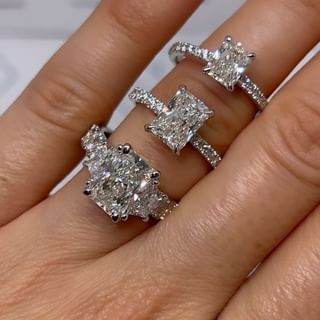
In the pursuit of the perfect centre stone, it’s common to focus attention primarily on the weight or dimensions of the diamond or gemstone, and then neglect the proportions of the ring as a whole. A massive stone can look unbalanced on a very slim band, just as a delicate stone can be swallowed by a heavy, wide setting. Custom design offers the opportunity to create a sense of harmony between the stone, the setting, and the wearer’s hand. Consider the minute measurements of the band in relation to the diameter of the centre stone; matching an appropriately-sized stone to a band helps create a sense of proportion, and builds that harmony you want in your finished ring. Furthermore, consider the height of the bridge and the thickness of the shank. A well-proportioned ring feels balanced on the finger and doesn’t "roll" to the side. When possible, ask your designer for a 3D render or a wax model to visualize these proportions before the final casting takes place.
4. Rushing the Design Timeline
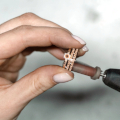
A custom engagement ring isn’t a product that can be whipped up in a weekend. The process involves several stages: initial consultation, 3D computer-aided design (CAD) modelling, wax carving, casting, stone setting, and final polishing. Each of these steps requires precision and time. A common pitfall is starting the process too close to the planned proposal date. This pressure can lead to rushed decisions or settling for a design that isn't quite right because there isn't time for a revision. Ideally, the custom process needs to begin at least eight to twelve weeks in advance. If you’ve arranged a conservative timeframe for your wedding, there should be ample time to work designing the engagement rings into your schedule. Taking the time to make this time buffer allows for meticulous quality control and ensures that if a specific stone needs to be sourced from a different supplier or location, there’s no need for panic given the generous timeframe you have to work with. Patience is the secret ingredient to a flawless custom piece.

5. Ignoring the Wedding Band Integration
It is a classic oversight to design a stunning engagement ring without considering how a wedding band will sit against it. Many custom engagement rings feature unique "baskets" or low-set stones that prevent a straight wedding band from sitting flush. This results in a "gap" between the two rings that some find distracting. If you desire a seamless look where both rings sit tight against each other, then it pays to plan for this during the initial design phase. You may need to opt for a "cathedral" setting that raises the head of the ring, allowing a band to slide underneath, or plan for a contoured or "shadow" wedding band designed specifically to curve around the engagement ring’s unique shape. Thinking one step ahead ensures that your bridal set looks like a cohesive pair rather than two mismatched pieces. By avoiding these five pitfalls, you can customize your own engagement ring with confidence and not simply settle for buying a standard ring online. Designing a ring is a deeply personal expression of love; by focusing on these qualities during your own crafting process, you ensure that the final product is a perfect reflection of your commitment, and one that lasts for years to come. Ready to take the plunge in your relationship? National Jewel Creations is here to help you make customized engagement and wedding rings. Making your own rings can be an engaging, meaningful, and affordable process, and we’re only too happy to help make it one more milestone in your relationship. Give us a call now at (647) 350-4949 and we’ll help you make a ring that’s all your own.