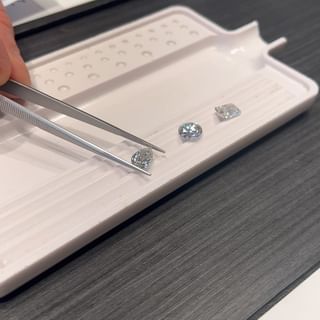
Want a Guilt-free Sparkle? 5 Environmental Benefits of Lab-grown Diamonds
There’s no denying the allure of fine jewellery, in the past or now, and nowhere is that observation more apparent than in wedding and engagement rings. For generations, diamonds have symbolized eternal love, enduring commitment, and unparalleled luxury. However, the modern consumer is aware (and increasingly so) of the consequences left by their purchases. Indeed, many jewellers and related businesses can play a major role in detecting financial crime. Many buyers are specifically concerned with their ecological footprints when buying, and this extends to sourcing diamonds for their jewellery. One consequence of this more ecologically-conscious shift is that the traditional gemstone industry has come under intense scrutiny. Sourcing diamonds no longer needs to involve the ecological disruption of digging vast mines. Enter the laboratory-grown diamond: a triumph of modern science that offers the exact same physical, chemical, and optical properties as a mined diamond, but with a fundamentally different origin story. If you’re on the hunt for a stunning piece of jewellery that also conforms to responsible ecological stewardship, here are five environmental benefits of choosing lab-grown diamonds.

1. Preventing Destructive Excavation
Diamonds are mined out of the earth, which inherently requires moving vast volumes of soil and rock. Traditional diamond mining operations carve massive open pits into the earth's surface, creating craters that can span several kilometres. This aggressive excavation leads to severe soil erosion, alters the area’s natural topography, and permanently scars the landscape. Conversely, creating lab-grown diamonds takes zero earth movement; searching for diamonds for your rings no longer involves shifting so much earth to reach them. These gems are cultivated above ground in sophisticated scientific facilities that occupy a minimal physical footprint. And because making them doesn’t require tearing the earth apart, lab-grown diamonds allow natural landscapes to remain undisturbed and intact.
2. Preserving Precious Water Resources
Potable water is one of the most vital and fragile resources in the world; however, traditional mining operations consume it in staggering quantities. The extraction and separation processes require immense volumes of water to wash the crushed ore and separate the heavy minerals. Furthermore, this resulting wastewater is frequently heavily polluted with suspended solids and sediment, which can pose a severe threat to local watersheds if not disposed of properly. Lab-grown diamonds, on the other hand, require merely a fraction of the water to produce. The highly controlled laboratory environments utilize advanced, closed-loop cooling systems that recycle water continuously throughout the growth phase. Such a drastic reduction in water consumption helps protect local aquifers and ensures that clean, fresh water remains available for surrounding communities and natural ecosystems.
3. Reducing in Greenhouse Gas Emissions
Shifting tons of earth to extract diamonds takes a proportionate amount of power. The energy requirements for the heavy machinery required to operate a traditional commercial diamond mine are enormous. Giant diesel-powered excavators, massive transport trucks, and heavy-duty industrial generators work around the clock, releasing vast plumes of greenhouse gases into the atmosphere. The carbon footprint associated with simply locating and extracting a single rough stone from deep underground is proportionally immense. Creating a diamond in a laboratory does require energy to replicate the intense heat and pressure found deep within the earth's crust. However, because these scientific facilities operate in a static environment, they completely eliminate the need for fossil-fuel-guzzling heavy machinery. Furthermore, many modern laboratories are aggressively transitioning to renewable energy grids, harnessing solar and wind power to fuel their reactors. This shift fundamentally transforms the carbon profile of the gemstone, making it a far cleaner choice for the atmosphere.
4. Protecting Local Wildlife Habitats
Before a commercial mine can even be constructed, the area’s massive tracts of land must be cleared of all native vegetation. Such sweeping deforestation also displaces those local species of wildlife, disrupting delicate ecological balances and destroying habitats that might have taken centuries to form naturally. The noise, artificial light, and thick dust pollution generated by ongoing mining activities further drive away animal populations from the surrounding area, further impacting the ecology of the area. Because lab-grown diamonds are produced within existing commercial or industrial zones, they don’t encroach on any wild habitats. Choosing a laboratory-cultivated stone helps ensure that the forests, tundras, and savannas where mining operations might otherwise occur can instead continue to thrive without the looming threat of those operations clearing the way for extraction.
5. Eliminating Toxic Runoff and Chemical Contamination
Industrial mining means more than simply moving earth; it’s frequently a highly chemical process. The explosives used to blast through solid bedrock typically leave behind noxious chemical residues, and the deep earth extraction process often exposes subterranean minerals that react with air and water to create acid mine drainage. This toxic runoff can leach into the surrounding soil and underground water tables, poisoning plant life and aquatic ecosystems for generations to come. While Canada has taken steps toward more sustainable mining practices to help minimize such risks, synthesizing diamonds in a laboratory is a more controlled, sterile process. Whether utilizing High Pressure High Temperature or Chemical Vapour Deposition methods, the creation of the diamond happens entirely within sealed vacuum chambers. There are no explosives, no harmful leaching agents, and absolutely no toxic runoff released into the surrounding natural environment.

Acquiring beautiful diamonds for your engagement and wedding rings doesn’t have to come at the expense of the earth’s health, and thanks to artificial diamonds they definitely don’t have to. Lab-grown diamonds offer a wider range of options for celebrating some of your life's most precious moments, offering the same beauty as natural stones while also demonstrating a deep respect for our natural world. By choosing one of these gemstones instead of a natural one, you can enjoy the dazzling brilliance of a diamond with the peace of mind that comes from making a more responsible choice. A guilt-free sparkle doesn’t have to remain a dream; finding the right lab-grown diamonds is now a brilliant, affordable, and attainable reality.
Ready to discover the perfect, guilt-free sparkle for your next milestone? Take a look at our offerings at National Jewel Creations. When you want a diamond for your rings you can trust was ethically sourced, our team can provide. Our jewellers are here to guide you at every step of the design process and help bring your vision to life. Call us today at (647) 350-4949 to schedule your personalized consultation and develop a ring that’s all yours.